
Latest News
Integrate Node-RED & Victron Cerbo GX for Smart Energy
Jan
Integrate Node-RED & Victron Cerbo GX for Smart Energy
Integrating Node-RED with Victron Cerbo GX opens up a world of possibilities for managing and optimizing energy solutions. Node-RED, a powerful flow-based development tool, allows you to create custom dashboards and automate tasks, while Victron Cerbo GX serves as a communication center for your energy system. Together, they enable smart energy solutions tailored to your needs. In this article, we will explore the steps required to integrate Node-RED with Victron Cerbo GX, discuss the benefits of this integration, and provide practical examples of how it can enhance your energy management system.
What is Node-RED?
Node-RED is an open-source, visual programming tool designed to connect hardware devices, APIs, and online services in new and interesting ways. With its intuitive interface, you can create complex workflows by simply dragging and dropping nodes on a canvas, making it accessible even to those with minimal programming experience.
- Flow-based Programming: Node-RED uses a visual approach to programming, allowing you to design your applications’ logic by connecting nodes that represent different functionalities. This method reduces the complexity of coding, making it easier to conceptualize and execute tasks. By using visual nodes, users can create intricate workflows without needing deep technical knowledge. This approach democratizes programming, enabling more people to engage in software development.
- Extensive Node Library: With a vast library of pre-built nodes, you can quickly add new capabilities to your application without writing code from scratch. The library includes nodes for connecting to databases, APIs, and various devices. This extensive collection not only saves time but also ensures that users can leverage tried-and-tested components. As new nodes are regularly added, the library continues to grow, expanding the potential applications of Node-RED.
- Community Support: The active Node-RED community provides a wealth of resources, including tutorials, forums, and additional nodes, to help you get the most out of the platform. This community fosters collaboration and innovation, as users share their projects and solutions. With a vibrant ecosystem of contributors, the platform constantly evolves, incorporating feedback and new ideas. The supportive environment makes it easier for newcomers to learn and grow their skills.
- User-Friendly Interface: Node-RED’s drag-and-drop interface simplifies the programming process, making it accessible to non-programmers. This intuitive design encourages experimentation and creativity, allowing users to focus on problem-solving rather than syntax. The visual nature of Node-RED also facilitates collaboration, as team members can easily understand and contribute to projects.
- Flexibility and Adaptability: Node-RED can be deployed on various platforms, including Raspberry Pi, cloud services, and traditional servers. Its adaptability makes it suitable for a wide range of applications, from home automation to industrial control systems. This flexibility ensures that users can scale their solutions as needed, accommodating growth and changing requirements.
- Rapid Prototyping: The ability to quickly design and test workflows allows developers to iterate rapidly and refine their solutions. This rapid prototyping capability accelerates the development process, enabling faster time-to-market for new applications. By reducing development cycles, Node-RED helps businesses stay competitive and responsive to market demands.
What is Victron Cerbo GX?
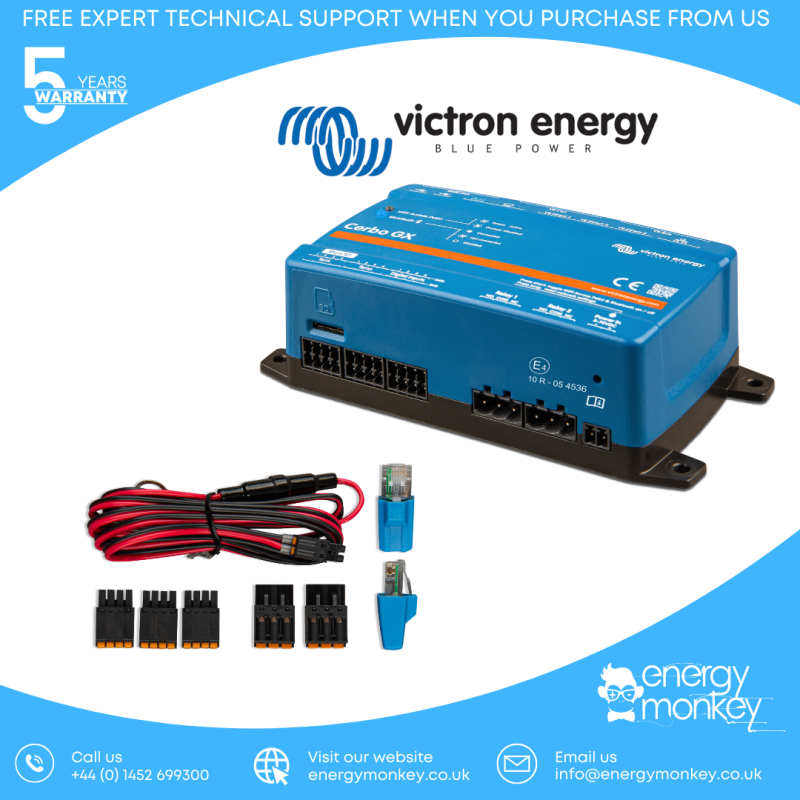
The Victron Cerbo GX is a powerful communication hub for managing your energy system. It gathers data from various devices like solar chargers, inverters, and battery monitors, and allows you to remotely monitor and control them via the internet.
- Device Communication: Cerbo GX connects to multiple devices and displays their status in real-time, ensuring you have a comprehensive view of your energy system. This real-time data collection enables prompt decision-making and troubleshooting. By providing a centralized platform for device communication, Cerbo GX streamlines the management of complex energy systems. The integration of diverse devices enhances system coherence and efficiency.
- Remote Monitoring: With the Victron Remote Management (VRM) portal, you can access your energy data from anywhere, at any time. This remote accessibility empowers users to manage their energy systems even when they’re away from the physical site. By providing insights into system performance and potential issues, remote monitoring facilitates proactive maintenance and optimization. The VRM portal’s user-friendly interface ensures that critical information is readily available.
- System Optimization: By analyzing data from connected devices, Cerbo GX helps optimize your energy consumption, potentially reducing costs and increasing efficiency. The system’s ability to provide actionable insights allows users to make informed decisions about energy usage. By identifying patterns and trends, Cerbo GX supports the implementation of energy-saving strategies. Continuous optimization ensures that energy systems operate at peak performance.
- Enhanced Energy Management: Cerbo GX provides a centralized platform for managing all aspects of an energy system, improving overall efficiency. Its comprehensive monitoring capabilities facilitate the identification of inefficiencies and opportunities for improvement. By consolidating data from various devices, Cerbo GX simplifies energy management and enhances system integration.
- Scalability and Flexibility: As energy needs evolve, Cerbo GX can accommodate additional devices and expand its monitoring capabilities. This scalability ensures that the system can grow alongside user requirements, supporting long-term sustainability. The flexibility of Cerbo GX allows users to customize their energy management approach, adapting to changing circumstances.
- Cost Savings and Environmental Benefits: By optimizing energy consumption and reducing waste, Cerbo GX contributes to lower energy costs and environmental impact. Efficient energy management minimizes unnecessary energy use, reducing greenhouse gas emissions and promoting sustainability. The financial savings achieved through optimized energy usage can be reinvested in further system improvements.
Integration Steps
Integrating Node-RED with Victron Cerbo GX involves setting up a Node-RED instance, connecting it to the Cerbo GX, and creating custom dashboards to visualize and control your energy system. To get started, you’ll need to install Node-RED on a compatible device, such as a Raspberry Pi or a server. Follow these steps:
1. Install Node-RED
Visit the https://nodered.org/ for installation instructions tailored to your operating system. The website offers detailed guidance, ensuring a smooth installation process. By following the step-by-step instructions, you can quickly set up Node-RED on your chosen device. The platform’s versatility allows it to run on various hardware and software configurations.
2. Access the Editor
Once installed, you can access the Node-RED editor by navigating to http://<your-device-ip>:1880 in your web browser. The editor provides a graphical interface for designing and managing your workflows. By accessing the editor, you can begin creating and customizing your Node-RED projects. The web-based interface ensures that your projects are easily accessible from any device with internet connectivity.
3. Install Required Nodes
Search for and install additional nodes that are relevant to your project, such as the node-red-dashboard for creating custom dashboards. The Node-RED library offers a wide range of nodes tailored to different applications and industries. By installing the appropriate nodes, you can enhance the functionality of your workflows and meet specific project requirements. Regularly updating and expanding your node library ensures that you have access to the latest features and improvements.
With Node-RED set up, the next step is to connect it to your Victron Cerbo GX. This can be done using the Modbus TCP protocol, which allows communication between the two systems.
4. Enable Modbus TCP on Cerbo GX
Access the Cerbo GX settings and enable Modbus TCP communication. This step ensures that your Cerbo GX is ready to communicate with external systems like Node-RED. By enabling Modbus TCP, you create a pathway for data exchange between Cerbo GX and Node-RED. This configuration is crucial for establishing a seamless connection and ensuring reliable communication.
5. Configure Node-RED
In Node-RED, use the node-red-contrib-modbus nodes to establish a connection to your Cerbo GX. Configure the Modbus client node with the appropriate IP address and port of your Cerbo GX. The configuration process involves specifying connection parameters and selecting the relevant Modbus nodes. By accurately configuring the Modbus client, you ensure that data flows smoothly between Node-RED and Cerbo GX. This connection forms the foundation for creating integrated energy management solutions.
6. Test the Connection
After configuring the connection, test the communication between Node-RED and Cerbo GX to ensure everything is working correctly. This testing phase is essential for identifying and resolving any connectivity issues. By verifying the connection, you can proceed with confidence, knowing that your integration setup is functioning as intended. Successful testing confirms that data is being transmitted accurately between the two systems.
Once the connection is established, you can create custom dashboards in Node-RED to visualize and control your energy system.
7. Design the Dashboard
Use the node-red-dashboard nodes to create a user-friendly interface. You can add widgets like gauges, charts, and text displays to show real-time data from your energy system. The dashboard design process involves selecting and arranging widgets to create an intuitive layout. By customizing the dashboard, you can ensure that it meets your specific monitoring and control requirements. A well-designed dashboard enhances user experience and facilitates efficient energy management.
8. Create Automation Flows
Design automation flows to optimize your energy consumption. For example, you can create a flow that automatically switches to solar power when battery levels are high, or sends an alert when consumption exceeds a certain threshold. Automation flows enable the implementation of intelligent energy management strategies. By automating routine tasks, you can reduce manual intervention and improve system responsiveness. Tailored automation flows ensure that your energy system operates efficiently and effectively.
9. Monitor and Adjust
Continuously monitor the performance of your dashboards and automation flows, making adjustments as needed to improve efficiency and effectiveness. Regular monitoring allows you to identify potential issues and optimize system performance. By staying informed about energy usage patterns, you can make data-driven decisions to enhance energy management. Ongoing adjustments ensure that your integration solution remains aligned with your energy goals.
Benefits of Integration
The integration of Node-RED and Victron Cerbo GX offers several benefits for managing your energy system:
- Real-Time Data Visualization: With custom dashboards, you can visualize data from your energy system in real-time, enabling better decision-making. Real-time insights provide a clear picture of system performance, allowing for prompt action. By visualizing key metrics, you can identify trends and anomalies that may impact energy management. Real-time monitoring supports proactive interventions and enhances system reliability.
- Customizable Dashboards: Tailor your dashboards to display the information most relevant to your energy management goals. Customization ensures that you have quick access to critical data, streamlining decision-making. By focusing on the most important metrics, you can optimize system performance and achieve your energy objectives. Personalized dashboards enhance user engagement and facilitate effective energy management.
- Improved Data Analysis: Access to comprehensive data allows for more in-depth analysis and insights into energy consumption patterns. By analyzing historical data, you can identify opportunities for improvement and implement targeted strategies. Informed analysis supports the development of energy-saving initiatives and enhances system efficiency. Data-driven decision-making empowers users to achieve their energy management goals.
- Streamlined Operations: Automate repetitive tasks and optimize energy consumption with tailored workflows. Automation reduces the need for manual intervention, freeing up resources for other tasks. By streamlining operations, you can improve system efficiency and reduce operational costs. Automation workflows ensure that your energy system operates smoothly and effectively.
- Intelligent Control: Implement intelligent control strategies that respond to changing conditions and optimize energy usage. Intelligent control ensures that your energy system adapts to dynamic environments and maximizes efficiency. By leveraging automation, you can enhance system responsiveness and reduce energy waste. Intelligent control strategies contribute to sustainable energy management.
- Proactive Alerts: Set up alerts to notify you of potential issues or changes in energy consumption patterns. Proactive alerts enable timely interventions and prevent potential disruptions. By staying informed about system status, you can maintain optimal performance and avoid costly downtime. Alerts support proactive maintenance and enhance system reliability.
- Expandable System: Easily expand your system by adding new devices and creating additional automation flows as needed. Scalability ensures that your energy management solution can grow alongside your needs. By accommodating new technologies and devices, you can enhance system capabilities and performance. An expandable system supports long-term sustainability and adaptability.
- Flexible Integration: Integrate additional tools and technologies to enhance your energy management capabilities. Flexible integration allows you to customize your solution and address specific challenges. By combining multiple technologies, you can create a comprehensive energy management system that meets your unique requirements. Flexible integration supports innovation and continuous improvement.
- Future-Proofing: Prepare your system for future advancements and changes in energy technology and policy. Future-proofing ensures that your energy management solution remains relevant and effective over time. By anticipating changes and adapting accordingly, you can maintain a competitive edge in energy management. Future-proofing supports long-term success and sustainability.
- Energy Efficiency: By optimizing your energy usage and reducing waste, you can potentially lower energy costs over time. Energy efficiency initiatives contribute to financial savings and environmental benefits. By minimizing unnecessary energy use, you can reduce operational expenses and promote sustainability. Energy efficiency supports responsible energy management.
- Reduced Maintenance Costs: Proactive monitoring and automation can help reduce maintenance costs and extend the lifespan of your energy system. By identifying and addressing issues early, you can prevent costly repairs and replacements. Reduced maintenance costs free up resources for further system improvements and investments. Proactive maintenance supports system longevity and reliability.
- Increased ROI: Achieving energy savings and reducing operational costs can lead to a higher return on investment for your energy management solution. Increased ROI demonstrates the value and effectiveness of your integration efforts. By maximizing financial returns, you can reinvest in further system enhancements and innovations. A higher ROI supports sustainable energy management practices.
Practical Examples
Integrating Node-RED with Victron Cerbo GX can be applied in various scenarios to enhance energy management:
- Smart Home Integration: Monitor and optimize energy usage in your home by integrating solar panels, battery storage, and smart appliances. Smart home integration enhances convenience and efficiency, allowing for seamless energy management. By automating tasks and optimizing usage, you can reduce energy costs and enhance sustainability. Smart home solutions support modern, efficient living.
- Personalized Energy Solutions: Tailor your energy management approach to suit your unique lifestyle and preferences. Personalized solutions ensure that your energy system aligns with your specific needs and goals. By customizing your approach, you can maximize comfort and efficiency while minimizing waste. Personalized energy solutions enhance quality of life and promote sustainability.
- Environmental Impact: Reduce your carbon footprint by optimizing energy usage and incorporating renewable energy sources. Environmental impact reduction contributes to a more sustainable future and demonstrates responsible energy management. By prioritizing sustainability, you can protect natural resources and promote environmental stewardship. Environmental impact reduction supports a healthier planet.
- Energy Efficiency Improvements: Improve energy efficiency in commercial buildings by automating lighting, HVAC systems, and other energy-consuming devices. Energy efficiency improvements contribute to cost savings and environmental benefits. By optimizing building operations, you can enhance occupant comfort and productivity. Energy-efficient buildings support sustainable development and corporate responsibility.
- Centralized Control: Implement centralized control systems to manage energy usage across multiple buildings or facilities. Centralized control enhances oversight and coordination, allowing for more effective energy management. By consolidating data and operations, you can improve system integration and performance. Centralized control supports efficient and scalable energy solutions.
- Regulatory Compliance: Ensure compliance with energy regulations and standards by implementing advanced monitoring and reporting capabilities. Regulatory compliance demonstrates commitment to responsible energy management and corporate accountability. By adhering to standards, you can avoid penalties and promote best practices. Regulatory compliance supports long-term success and sustainability.
- Remote Monitoring and Control: Manage off-grid systems more effectively by monitoring battery levels, solar generation, and load demands. Remote monitoring enhances system oversight and responsiveness, allowing for timely interventions. By maintaining optimal performance, you can ensure reliable energy supply and minmize downtime. Remote monitoring supports off-grid sustainability and resilience.
- Resource Optimization: Optimize resource usage in off-grid systems by implementing intelligent control strategies. Resource optimization ensures that energy is used efficiently and effectively, reducing waste and costs. By managing resources wisely, you can enhance system performance and sustainability. Resource optimization supports self-sufficiency and environmental stewardship.
- Emergency Preparedness: Enhance emergency preparedness by implementing automated alerts and backup power solutions. Emergency preparedness ensures that your off-grid system can withstand unexpected events and disruptions. By maintaining readiness, you can protect critical resources and ensure continuity of operations. Emergency preparedness supports resilience and peace of mind.
Integrating Node-RED with Victron Cerbo GX provides a powerful solution for managing and optimizing energy systems. By following the steps outlined in this article, you can create custom dashboards, automate tasks, and enhance the efficiency of your energy management system. Whether you’re managing a home, commercial building, or off-grid system, this integration offers the flexibility and scalability needed to meet your energy goals. By leveraging the capabilities of both Node-RED and Victron Cerbo GX, you can unlock the full potential of smart energy solutions and achieve greater control over your energy consumption. Purchase your Victron Cerbo GX today to start your integration journey today and experience the benefits of a smarter, more efficient energy management system.
- Technological Advancements: Stay informed about technological advancements and trends in energy management to enhance your integration solution. By embracing innovation, you can maintain a competitive edge and drive continuous improvement. Technological advancements offer new opportunities and capabilities for energy management.
- Sustainable Practices: Commit to sustainable practices and responsible energy management to support a more sustainable future. By prioritizing sustainability, you can contribute to environmental protection and resource conservation. Sustainable practices promote social responsibility and long-term success.
- Collaboration and Innovation: Engage with the energy management community to foster collaboration and innovation in energy solutions. Collaboration enhances knowledge sharing and problem-solving, supporting collective progress. By working together, you can achieve greater impact and drive positive change in energy management.
Contact Us
If you have any questions or need assistance in selecting the right kit, please don’t hesitate to reach out to us –
Phone – +44 1452 699300
Email – info@energymonkey.co.uk
Address – Unit 2 Huntley Business Park, Gloucester, GL19 3FF, United Kingdom
Stay Connected
Follow us on social media to stay updated on the latest products, news, and promotions –
Facebook – Energy Monkey Ltd
Instagram – @energymonkey.co.uk
LinkedIn – https://www.linkedin.com/company/energy-monkey
Twitter – https://x.com/EnergyMonkey2
Youtube – https://www.youtube.com/channel/UCRuqb3XL5vR31kS-r5IXfMQ